

Temporal Tidbits: A Few Updates
Odds and ends from London history.

Welcome to Londonist: Time Machine, the newsletter for London history.
A short one today, as I’m gearing up for a family break next week (I’ll have a guest article about Samuel Pepys on Wednesday).
Today’s newsletter is a roundup of a few London history tidbits that have caught my eye recently, including a new museum, a little-known museum, some new books and a threat to an old London landmark.
First, an event announcement and the history radar…
Subscriber Event
Have you ever ventured out to Rainham, where Greater London rubs up against Essex? It’s a fascinating and little-visited part of town, with some 6,000 years of human history. On 4 October 2026, tour Guide Rob Smith will lead a two-hour historical tour of the area, ranging from prehistory to little-known Second World War stories.
This is an event for paying subscribers only (and plus-ones). You can join us on the walk by signing up here. I’ve been on many of Rob’s walks over the years, and I can’t recommend him highly enough. As ever, I’ll be leading a contingent to the pub afterwards, if anyone wants to continue the conversation. (Not sure I’ve ever been to a pub in Rainham.)
History Radar
Upcoming events of interest to London history fans.
🔏JACK SHEPPARD: The London Archives in Clerkenwell hosts a 90-minute talk on the history of burglary and housebreaking in the capital, and the life of notorious burglar Jack Sheppard. The session, led by Dr Anna Cusack, looks at policing, punishment and social context. 5 August
🔔 LONDON TRADITIONS: If you enjoy the many wacky/ancient traditions of the Square Mile, then head to Guildhall Library on 6 August for a free talk about the capital’s many fascinating customs and observances.
♗ FULHAM PALACE: Successive bishops have pottered around the walled garden at Fulham Palace while in residence here. A tour on 9 August offers a chance to learn more about these men of the cloth, and their relationship with the space — including Bishop Terrick, who redesigned the garden in the 18th century to take advantage of the river views.
🔎 CURISTORIAN CLUB: If you hang out on Instagram and other reelmongers, then you must surely have seen Jonnie Fielding’s Bowl of Chalk videos, which explore some of the capital’s more unusual spots. Well, Jonnie’s now doing live events, called Curistorian Club, which pair up interesting Londoners for evening talks on London topics. On the Sep-Dec programme are:
29 Sep: Historian Victoria Shepherd & artist Ben Edge (tickets)
20 Oct: Yeoman warder Christopher Skaife & artist James Bacchi-Andreoli (tickets)
24 Nov: London explorer Matt Brown (whoever he is) & Henry Wilkinson of Ben Franklin house (tickets)
8 Dec: Playwright and screenwriter Morgan Lloyd Malcolm & Tanya Moulding aka The Perfume Mistress (tickets)
☠️ LONDON MONTH OF THE DEAD: Tickets for the annual festival of all things sepulchral are now on sale. The programme features a mix of talks, tours and site visits to catacombs and mausoleums. Some events have already sold out, so get in quick. I’m taking part in this one, too, with a talk on ‘Mapping the Dead’. Throughout October
✍🏽 WRITING COMPETITION: Just a reminder that the first Londonist: Time Machine history writing competition is now open for entries. The winner will receive £350 and be published in this newsletter. All you have to do is write a short article (1500-2500 words) on some aspect of London history. See the link for rules and further details.
Temporal Tidbits
An assortment of historical oddments that have caught my eye over recent weeks.
The Clockworks
I bet you didn’t know that London has an electrical clock museum. It’s down in West Norwood, and it goes by the name of The Clockworks. The museum was kind enough to offer a tour to Londonist: Time Machine paying subscribers recently.
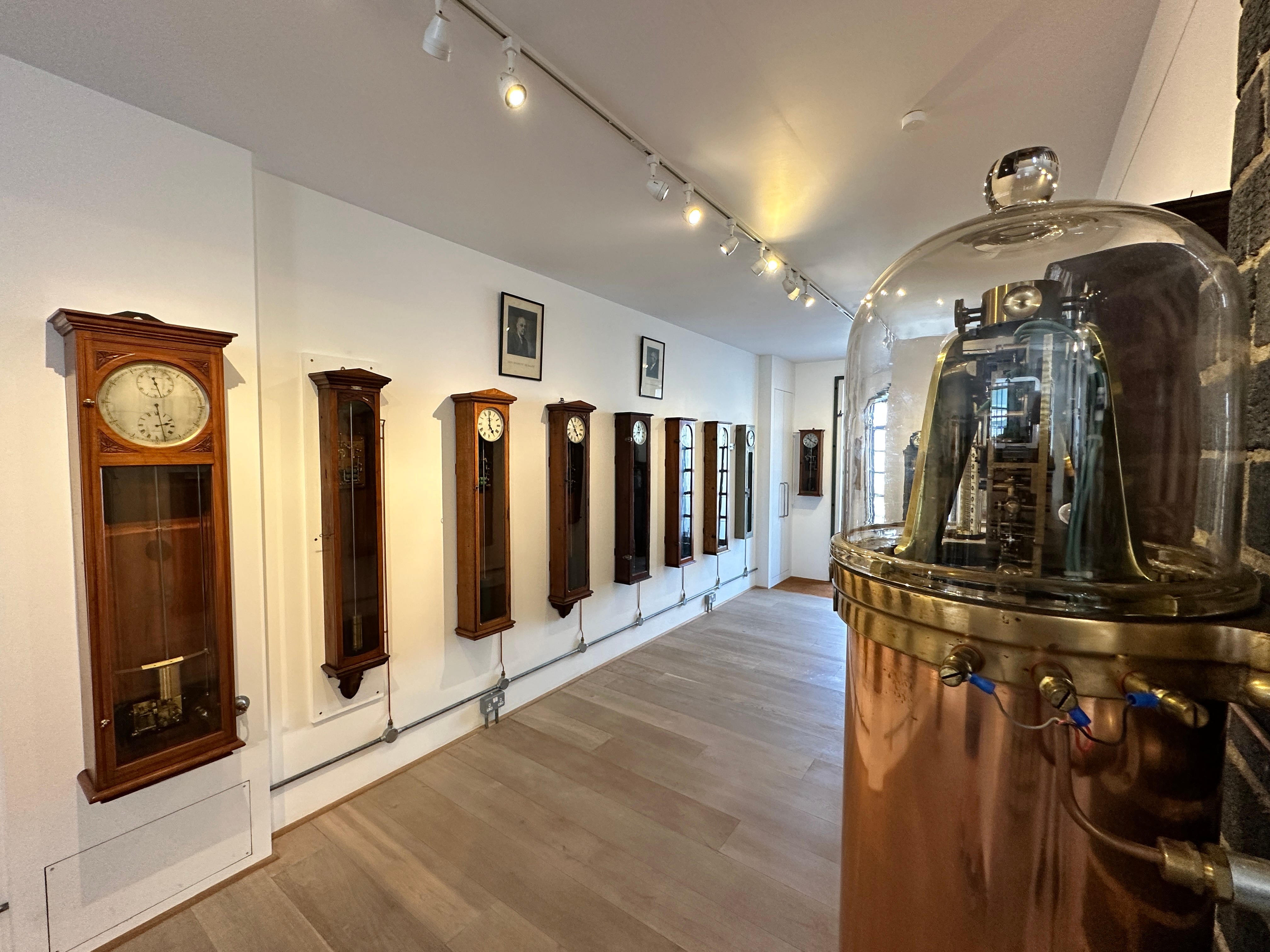
The Clockworks is home to around 100 timepieces, all of which are electrically powered. We’re not talking bedside alarm clocks here, but skilfully crafted timepieces, many of which use pendulums to regulate time. The oldest clock in the collection dates back to the very dawn of electrical power in the 1840s, courtesy of the inventor Alexander Bain.
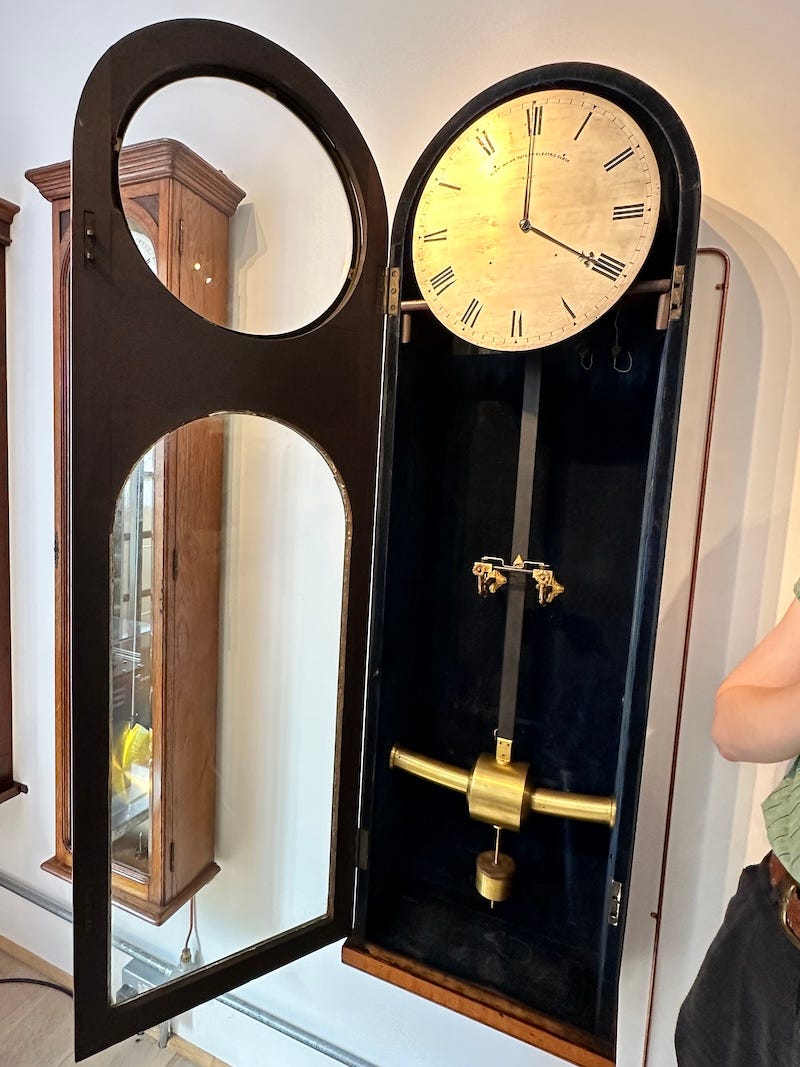
The Clockworks is a visually arresting space, but also an aural treat. The expected ticks and tocks are supplemented with curious whirrs and clunks, as individual clocks recalibrate their pendulums.
The museum tells the story of how clocks went electric, thereby enabling synchronisation to a standard, precise time. This became essential in the railway age, when trains and stations needed to agree upon, and keep to, an accurate timetable. The development of electrical timekeeping was a crucial if largely unsung stepping stone to the modern world, and a chapter of history which The Clockworks tells so beautifully.
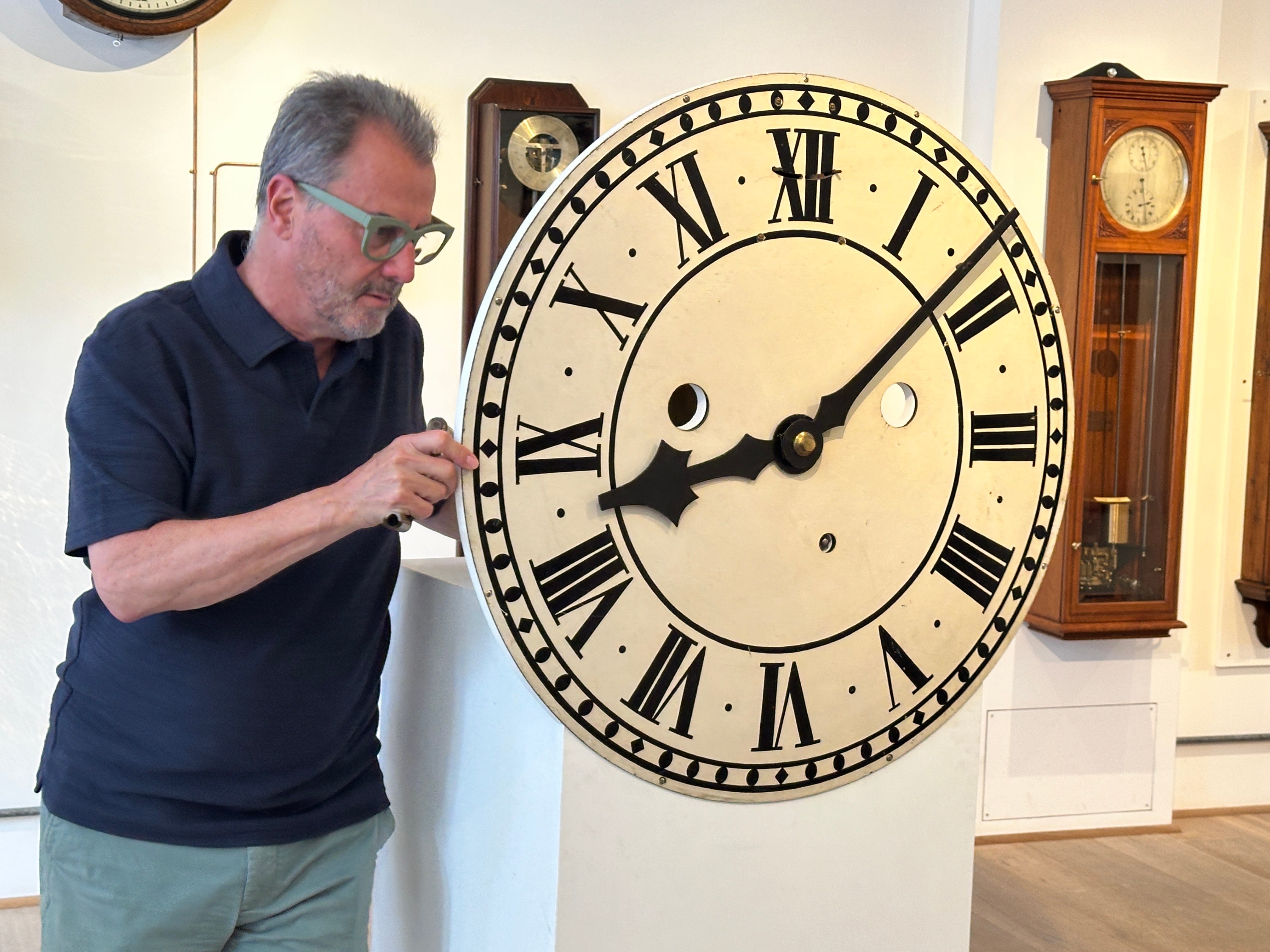
Private tours of the museum can be arranged upon request, and free public tours run every Friday at 12.30. My thanks to Dr Kirsten Tambling (curator) and Dr James Nye (founder) for their time… in more ways than one.
London’s newest museum: Trent Park House of Secrets
On the same day as the Clockworks tour, I also got to look around a rather special new museum up near Cockfosters. Trent Park House of Secrets is set within a handsome mansion that once belonged to Sir Philip Sassoon. During the Second World War it was converted to a ‘luxury prisoner-of-war camp’ for senior German officers.
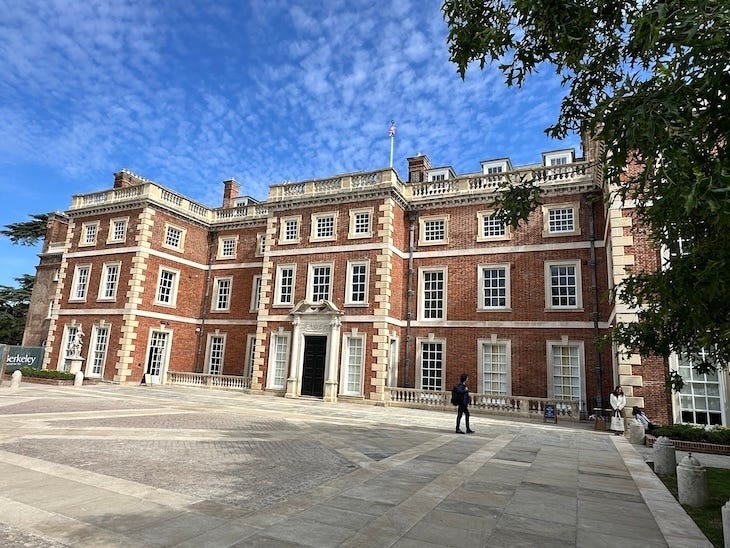
That alone would make this a curious location to explore. However, the house was not all it seemed. Unbeknown to the German prisoners, every room in the house was wired up with microphones. In the basement, German-speaking operatives listened in to every conversation, in the hope of picking up information about Nazi manoeuvrings. They struck gold on a number of occasions, uncovering, for example, new intelligence about the German V-weapons.
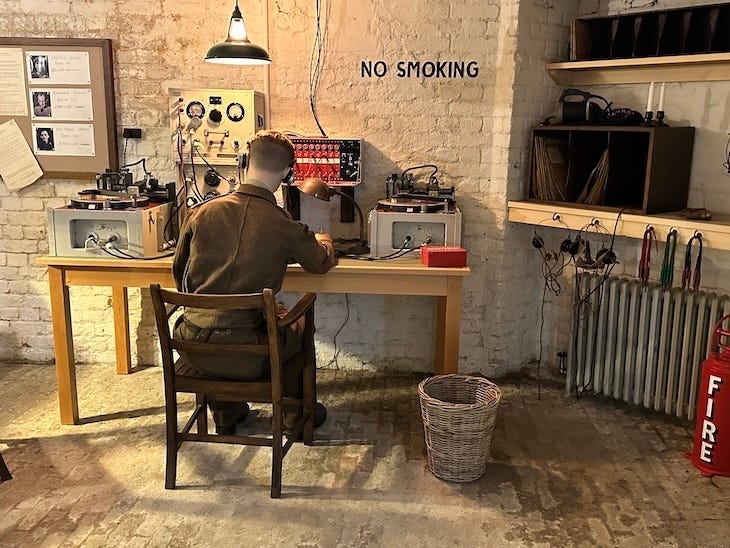
The museum offers a dual experience. You’ll start off in the swanky ground-floor state rooms of Philip Sassoon — all refined, mock-Georgian luxury. Then you’ll head down into the basement, to see the reconstructed listening posts and spy paraphernalia. It’s quite the contrast. A unique and important new museum. Read my full review, with photos, here.
Some new history books
Amberley Books regularly publishes volumes on the history of different London neighbourhoods, and the three latest titles may be of interest to some readers.
Wimbledon and Southfields in 50 Buildings, by Gabriel Moreno Whitehead
Extraordinary Wandsworth Women, by Chris Everett, Elaine Wein, Jenni Bowley and Jenny Rossiter
Notting Hill and North Kensington Murders and Misdemeanours, by Mick Davis
I may have already mentioned it, but I’m infatuated with CAMRA’s republished guide to London’s heritage pubs. As you’d expect from the real-ale aficionados, it presents an authoritative list of London’s most gorgeous pubs, but sets itself apart by giving equal focus to the Outer London boroughs. Highly recommended, if you enjoy historic pubs.
Another one to look out for, in October, is Mark Daly and Peter Dazeley’s latest tome of photography. London Secret and Hidden Places is a somewhat derivatively titled look at the capital’s more curious buildings. From what I’ve seen, it features some typically brilliant photography from Dazeley, with a selection of lesser-known locations. Not always, though. The Bloomberg building in the Square Mile is the opposite of hidden, and including the Tottenham Hotspur Stadium in a book of ‘secret and hidden places’ is first-class trolling.
Note: Links to Bookshop.org will give Londonist a tiny commission if you purchase the book from there (they also source from independent bookshops, so are a good platform to support).
HMS President
Hands up who remembers this?
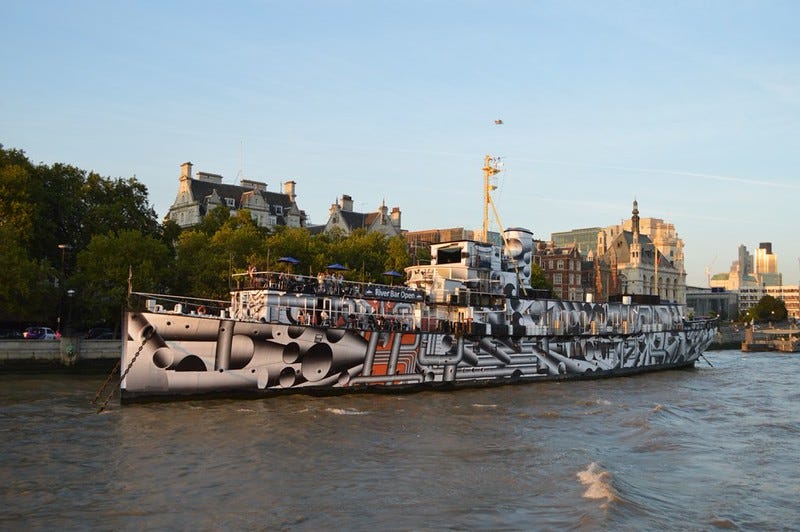
This is HMS President, painted in dazzle camouflage back in 2014. The ship launched in 1918 as HMS Saxifrage, but saw active service for only four years. She was moored on the Thames near Blackfriars in 1922 to be used as a training vessel under the new name of President. There she remained until 2016. In other words, she was a London landmark for almost 100 years. Now she’s under threat.
The ship was towed to Chatham in 2016, and has since sat there doing nothing much at all. With no money coming in, she’s in danger of being scrapped as berthing costs are no longer sustainable.

A group of community volunteers by the name of the Q-ship Society CIC, and headed by Daniel Broom, are doing their best to safeguard the ship’s future. They’re attempting to raise £100,000 to take ownership, find new moorings and restore the vessel to public use. If you’re interested in supporting their campaign, either financially or by helping to spread the word, then you can find the various links and options on their website.
Thanks for reading. As ever, feel free to leave a comment on the web version of this article. Or email me any time on matt@londonist.com. I might not reply next week, however, as I’m on holiday… and I’ve got a neat guest article lined up.
One reply I was reading (closed the App, disappeared!) an ex student at Trent Park referred to Wilfred Samuel. Really interesting so I looked him up. Article here
https://www.jstor.org/stable/43059084
Hopefully, some day Trent Park will include a How to Get Here page on their website. Or ... let me guess ... it's a secret?